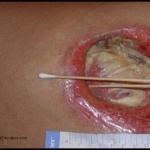
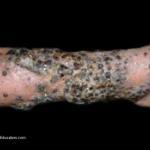
Skin Lesions Due To Malignant Melanoma
|

Skin Lesions Due To Malignant Melanoma

Malignant Melanoma Malignant melanoma is a rapidly progressing, metastatic form of cancer involving the melanocytes.  Early recognition of the tumor is essential because the patient’s chance of survival is increased with early treatment. Malignant melanomas differ in shape and size, and they can appear anywhere on the body. They present with irregular borders, uneven surfaces, and…
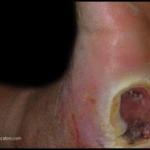
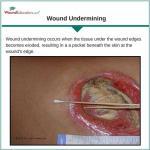
Diabetic Foot Ulcer Classification Systems
|

Diabetic Foot Ulcer Classification Systems

It is crucial to apply a standardized measurement system to evaluate whether a diabetic foot ulcer is responding to care, as a result several classification systems have been proposed. At the present time no specific system has been universally accepted.  Even so, most clinicians use one of the available systems when assessing and documenting a diabetic ulcer. In this article we…

How to Measure Wound Undermining

How to Measure Wound Undermining

 Wound Undermining Wound undermining occurs when the tissue under the wound edges becomes eroded, resulting in a pocket beneath the skin at the wound’s edge. Undermining is measured by inserting a probe under the wound edge directed almost parallel to the wound surface until resistance is felt.  The amount of undermining is the distance from the…

Pressure Ulcer – Stage IV
|

Pressure Ulcer – Stage IV

Full-thickness skin and tissue loss with exposed or directly palpable fascia, muscle, tendon, ligament, cartilage or bone in the ulcer. Slough and/or eschar may be visible. Epibole (rolled edges), undermining and/or tunneling often occur. Depth varies by anatomical location. If slough or eschar obscures the extent of tissue loss this is an Unstageable Pressure Injury….

Nutrition and Wound Healing: Nutritional Assessment

Nutrition and Wound Healing: Nutritional Assessment

It will probably come as no surprise that patients who are malnourished are prone to complications during wound healing. Mild malnutrition may cause a delay in wound healing, while severe malnutrition can lead to infection, sepsis and even death. For this reason, it is important to perform a nutritional assessment on patients presenting with a…

Nutrition and Wound Healing: Micronutrients Required for Wound Healing

Nutrition and Wound Healing: Micronutrients Required for Wound Healing

In addition to carbohydrates, proteins and fats (macronutrients), there are a number of micronutrients that are necessary for wound healing. Vitamins Vitamin A (retinol) is a fat-soluble vitamin that helps to maintain tissue integrity and healthy skin. This important vitamin is required for the formulation of granulation tissue, synthesis of collagen, epithelialization and macrophage functioning….

Nutrition and Wound Healing: Macronutrients Required for Wound Healing

Nutrition and Wound Healing: Macronutrients Required for Wound Healing

As health care professionals, we are all aware that good nutrition is necessary for wound healing, and that poor nutrition impedes wound healing. But do you know why specific dietary components are so important for healing? In this article, we’ll review the specific dietary macronutrients and the important role they play in the wound healing…

Wound Modalities Utilized in Wound Care: Promising Modalities Used Less Commonly

Wound Modalities Utilized in Wound Care: Promising Modalities Used Less Commonly

In this series, we have been focusing on wound care modalities that are commonly used in wound care management. Now we turn our focus to lesser known and less common wound care tactics. Monochromatic Infrared Energy (MIRE) Monochromatic Infrared Energy (MIRE) involves the delivery of near-infrared energy to the skin using diode pads. This therapy…