

Search Results for: wound infection

Prevention of Pressure Ulcers due to Incontinence

Prevention of Pressure Ulcers due to Incontinence

Prevention of Pressure Ulcers due to Incontinence Must Be a Priority Incontinence is a common risk factor for pressure ulcers. If you have worked in aged care or with elderly patients, you will know this to be true. Wet, moist skin can lead to rapid skin breakdown and the development of a pressure ulcer. There…
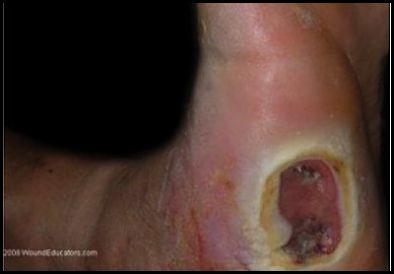
Epidemiology and Etiology of Diabetic Foot Ulcers

Epidemiology and Etiology of Diabetic Foot Ulcers

Diabetic foot problems, including ulcerations, infections, and gangrene, are the most common grounds for hospitalization among diabetic patients. In particular, foot ulceration affects between 15 and 25 percent of patients with diabetes mellitus during their lifetime. 1Diabetic foot ulcers are notoriously difficult to heal, and may take weeks or months to close, even if treated promptly…

Diagnosis of Necrotizing Fasciitis & Treatment

Diagnosis of necrotizing fasciitis (NF) can prove extremely challenging. The condition has many of the same characteristics as cellulitis, and is often diagnosed incorrectly as such.(1) The resulting delay in implementing appropriate treatment can prove catastrophic in such a rapidly progressing condition. Cellulitis or Necrotizing Fasciitis? One key differentiator between NF and cellulitis  is the…

Causes of Necrotizing Fasciitis & Risk Factors

Necrotizing fasciitis (NF), or the ‘flesh-eating bug’ as it tends to be known in the press, is an extremely rapidly progressing infection that is difficult to manage and can lead to significant morbidity and mortality. Risk Factors of Necrotizing Fasciitis While anyone with an infection may, in theory, develop NF, in practice the majority of…

Necrotizing Fasciitis – Introduction

Necrotizing fasciitis (NF) is a life-threatening soft tissue infection a condition, often referred to in the press as the ‘flesh-eating bug’ on account of the speed with which the infection spreads.  The condition was first described by Hippocrates around the fifth century, and the term “necrotizing fasciitis” was coined by Joseph Jones, a former Confederate…

Vasculitis – Prevention, Diagnosis, and Management

Vasculitis is an inflammation and necrosis of the blood vessels, leading to hemorrhage, ischemia, and infarction.(1–3) Treatment of the condition is entirely dependent on the extent of the disease. In many instances, cutaneous vasculitis is a self-limited condition, relieved by leg elevation, avoidance of standing, and therapy with non-steroidal anti-inflammatory drugs (NSAIDs). However, more extensive…

Classification of Vasculitis

Vasculitis, an inflammation of the blood vessel wall, is associated with multiple cutaneous manifestations as well as systemic sequelae.(1-5) Opinions on the Classification of Vasculitis Opinion is divided over the best way to classify cutaneous vasculitis. Some prefer classification according to etiology, differentiating between primary (idiopathic) and secondary disease.(1) Approximately 50% of cases are idiopathic,…